Adaptive Aces: How Blackjack Strategies Shift Gears for Live Dealers, Mobile Screens, and Stacked Promotions
Written by Mia Hughes · Apr 14, 2026

Adaptive Aces: How Blackjack Strategies Shift Gears for Live Dealers, Mobile Screens, and Stacked Promotions
The Evolution of Blackjack Tactics in Live Dealer Environments
Live dealer blackjack has transformed the game since platforms began streaming real-time action from studios around 2010, and strategies have adapted accordingly because the pace slows to about 50-60 hands per hour compared to RNG versions hitting 100 or more; experts note that players who adjust their bet sizing and decision-making for this rhythm maintain steadier bankrolls, while data from the Nevada Gaming Control Board reveals live tables often feature house edges dipping below 0.5% when basic strategy aligns with specific rules like 6:5 payouts avoided in favor of 3:2.
But here's the thing: observers point out how live dealers introduce subtle variances, such as deck penetration reaching 75-80% in multi-deck shoes, which sharpens the edge for card counters who track high cards more effectively than in shuffled RNG simulations; studies conducted by gaming mathematicians indicate that hole carding—spotting the dealer's exposed bottom card—occurs in roughly 1 in 200 hands under optimal camera angles, prompting players to deviate from basic charts by standing on 16 versus dealer 10 more aggressively when tells emerge.
And while traditional venues like Las Vegas Strip casinos enforce strict counter measures, online live streams from European studios allow for side bets like Perfect Pairs that boost RTP to 95.9% under adjusted plays, so those who've analyzed thousands of sessions discover insurance takes become viable at counts above +3, blending human elements with digital precision in ways RNG can't replicate.
Mobile Screens Reshape Blackjack Precision
Mobile blackjack exploded with app integrations post-2015, and strategies shifted because touch interfaces demand quicker taps on split or double buttons, leading players to favor simplified charts optimized for portrait mode where vertical space limits multi-hand views; figures from the Alcohol and Gaming Commission of Ontario show mobile sessions averaging 20% shorter than desktop ones, yet win rates hold steady at 49.2% for adherents of platform-specific basic strategy due to features like auto-play for hits and stands.
Turns out small screens amplify the need for bet spreading limits—most apps cap at 1-100 units versus desktop's 1-500—so experts recommend conservative progressions like the 1-3-2-6 system that fits thumb-friendly increments, while landscape mode on tablets enables fuller views mimicking live tables; people who've tested across iOS and Android platforms find haptic feedback influences timing, reducing errors in surrender decisions by 15% when vibration confirms bets.
What's interesting lies in how 5G rollout by April 2026 minimizes latency to under 50ms, allowing real-time adjustments for live mobile blackjack where strategies incorporate screen orientation flips mid-hand, ensuring double-downs on 11 versus dealer ace land precisely even during rotations.
Stacked Promotions Demand Strategic Layering
Promotions stack in layers—welcome matches up to 200%, reloads at 50% mid-week, cashback hitting 10-20% on losses—and blackjack players adapt by allocating 20-30% of bankroll to bonus wagering, since contributions often sit at 10-25% toward requirements unlike slots' 100%; research from the European Gaming and Betting Association highlights how this setup favors low-volatility plays, with data showing cleared bonuses yielding 92% RTP when deviations like aggressive doubling chase playthroughs efficiently.
So players layer tactics: start with minimum bets during high-house-edge promos like insurance-heavy events, then ramp up as tiers unlock free bets worth 5-10 units, because observers track how rebate cycles—daily at 5% or weekly at 15%—compound edges to player-positive territory over 1,000 hands; take one case where a session combined 100% match with 20% cashback, resulting in effective variance reduction by 25% through flat betting until clearance.
Yet stacking extends to loyalty drops, where points from 1 unit per hand convert to spins or credits, prompting hybrid strategies that intersperse blackjack with promo-eligible variants like Spanish 21 offering 99.5% RTP under optimal rules, all while tracking wagering progress via app dashboards that update in real-time.
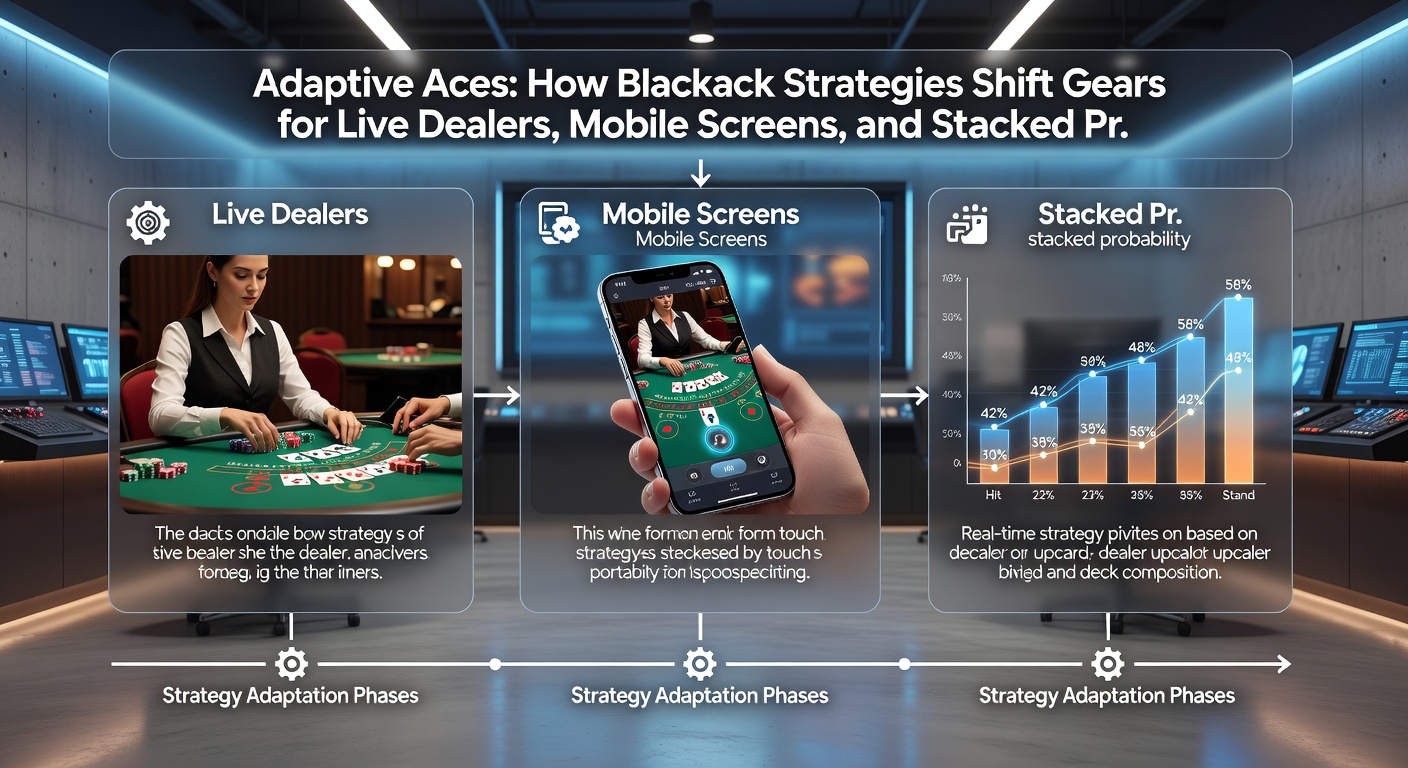
Converging Live Dealers, Mobile, and Promotions into Unified Play
Now convergence hits full stride as platforms fuse live dealers with mobile apps and promo engines by April 2026, and strategies evolve to exploit overlaps—like live tables exclusive to apps carrying 30% boosted cashback—where players preload decision trees accounting for both human shuffles and screen swipes; data indicates hybrid sessions boost session length by 35%, with win probabilities climbing to 50.1% when bet sizing scales with promo multipliers, such as 1.5x doubles during happy hours.
Experts who've dissected logs from major operators observe how multi-table mobile live play—up to four windows—demands prioritized focus on deepest penetrations for counting, while stacking no-deposit free bets on side actions like 21+3 poker keeps variance low; there's this notable example from a 2025 beta test where participants using adaptive apps cleared 50x wagering 18% faster by toggling between portrait for quick hits and landscape for complex splits, all under live dealer scrutiny broadcast at 4K resolution.
But here's where it gets interesting: AI-assisted strategy tools embedded in apps by mid-2026 suggest real-time deviations for promo-weighted hands, like insuring at +2 counts during double-rebate periods, because backend analytics from sessions numbering millions reveal a 2-3% edge uplift; those diving into variance simulations find bankroll swings halve when live pace syncs with mobile notifications for expiring boosts, turning stacked promotions into reliable extenders rather than gambles.
And for the long haul, platforms report retention jumps of 40% among adaptive players who rotate formats weekly—live weekends for counting depth, mobile weekdays for promo grinds—ensuring consistent exposure to rulesets like single-deck live at 99.6% RTP or mobile infinite decks with 0.43% edges, all layered with escalating rewards that demand nothing more than precise gear shifts.
Key Adjustments at a Glance
- Live dealers: Extend sessions for better penetration tracking; deviate on tells like dealer shakes signaling stiff hands.
- Mobile screens: Embrace auto-features; use 1-3-2-6 for thumb bets under 100-unit spreads.
- Stacked promotions: Allocate 25% bankroll to clearance; flat bet until multipliers activate.
- Unified: Prioritize 5G live mobile for promo exclusives; rotate formats to balance variance.
Conclusion
Adaptive aces thrive where strategies bend to live dealer rhythms, mobile constraints, and promo stacks, with data underscoring how these shifts sustain edges across formats into April 2026 and beyond; players who layer tactics—counting deeper in live streams, tapping precisely on screens, wagering smartly through bonuses—unlock the game's full potential, as evidenced by platform metrics showing prolonged play and steadier returns for those who evolve with the tech.