Algorithmic Card Ordering Systems in Mobile Gaming Environments and Connections to Layered Incentive Mechanisms Across Titles
Written by Riley Wolf · Aug 20, 2026

Algorithmic Card Ordering Systems in Mobile Gaming Environments and Connections to Layered Incentive Mechanisms Across Titles
Core Mechanics of Digital Deck Sequencing
Digital deck sequencing refers to the computational processes that generate and manage card distributions in electronic gaming applications, and these systems rely on pseudorandom number generators combined with cryptographic hash functions to produce sequences that mimic physical shuffles while operating within the constraints of portable device processors. Developers integrate these algorithms into mobile platforms where memory limitations and battery efficiency shape the implementation, yet the core remains focused on ensuring unpredictability across sessions. Observers note that portable formats introduce variables such as intermittent connectivity and device-specific hardware variations, which influence how sequencing engines recalibrate during active play.
Research from academic institutions highlights the use of entropy sources drawn from device sensors including accelerometers and touch inputs to enhance sequence variability, and this approach allows applications to maintain fairness standards without constant server synchronization. Those who study portable gaming technology point out that sequencing must account for state preservation across app suspensions, which occurs frequently on handheld devices, and this requirement leads to checkpoint systems that resume sequences without introducing detectable patterns.
Integration With Portable Platform Constraints
Portable formats impose specific demands on deck sequencing because applications must deliver consistent performance across diverse operating systems and screen sizes, while the algorithms adapt through modular code structures that separate core randomization from user interface rendering. Data from industry reports indicates that developers optimize these sequences for low-latency execution, and this optimization becomes essential when multiple games run in background processes on the same device. Experts have observed that cross-platform frameworks enable shared sequencing libraries, which reduce development overhead yet require rigorous testing to prevent sequence correlations between different titles on identical hardware.
Links to Multi-Game Promotion Stacking
Multi-game promotion stacking emerges when sequencing outputs from one title trigger eligibility conditions in another, and this linkage occurs through centralized player accounts that track progress across applications on portable devices. Operators design these systems so that specific card distribution patterns, such as consecutive high-value draws in one game, unlock bonus multipliers applicable in separate titles, thereby creating interconnected reward pathways. Figures from gaming technology analyses reveal that portable environments facilitate this stacking because push notifications and cloud-synced profiles allow seamless transitions between games without resetting accumulated incentives.
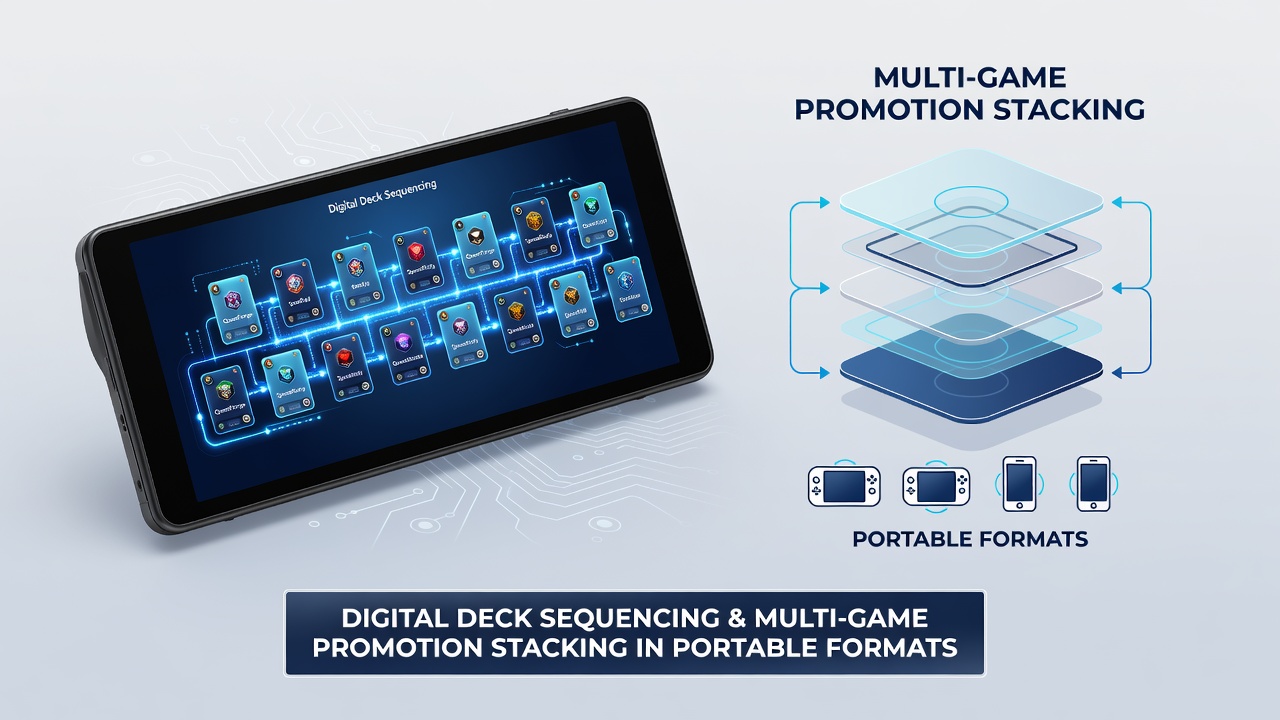
What's interesting is how sequencing data feeds into promotion engines that evaluate eligibility in real time, and this evaluation uses predefined thresholds derived from statistical models of expected sequence distributions. A researcher who examined portable gaming ecosystems found that stacking mechanisms often incorporate session length metrics alongside sequence outcomes, which encourages extended engagement across several applications. Yet the technical architecture demands precise timestamp alignment to avoid conflicts when promotions from different providers interact on the same account.
Technical Implementation Examples in 2026
By August 2026, several portable gaming platforms had adopted enhanced sequencing protocols that incorporate machine learning adjustments based on aggregate play data from millions of sessions, and these adjustments refine distribution fairness while supporting promotion layers that activate across game genres. According to reports issued by the Canadian Gaming Association, such integrations have expanded the scope of cross-title incentives without compromising the integrity of individual deck sequences. Developers achieve this balance through isolated modules where promotion logic operates independently from randomization cores, and this separation prevents unintended biases from propagating between systems.
One study revealed that portable formats benefit from edge computing techniques that process sequencing locally before syncing promotion states, which reduces latency during stacked reward redemptions. Those who've examined these implementations note the growing role of standardized APIs that allow third-party titles to participate in stacking frameworks while adhering to regional regulatory guidelines on game fairness.
Regulatory and Industry Perspectives
Regulatory bodies in various regions monitor how digital deck sequencing intersects with promotion stacking to ensure transparency, and the Australian Communications and Media Authority has published guidelines on data handling practices that affect player tracking across mobile applications. Industry organizations such as the International Gaming Standards Association provide certification frameworks that test both sequencing randomness and the accuracy of stacked incentive calculations. These certifications verify that promotion triggers derived from sequences meet statistical benchmarks before deployment on portable platforms.
Additional research conducted at institutions including the University of Nevada's gaming technology programs examines the long-term stability of these combined systems, and findings indicate that modular designs help maintain compliance as new titles join existing stacking networks. The reality is that portable environments continue to drive innovation in how sequencing and promotions coexist because device portability encourages frequent switching between applications.
Conclusion
Digital deck sequencing in portable formats establishes foundational mechanics that support multi-game promotion stacking through interconnected data flows and optimized algorithms, and ongoing developments as of August 2026 demonstrate continued refinement in these areas. Industry reports and academic examinations confirm that technical separations between randomization and incentive systems enable scalable implementations across devices. Those who track these trends observe that regulatory oversight from diverse regions sustains standards for both fairness and player data management in such environments.