Blackjack Session Durations Shape Reward Advancement Across Integrated Digital Gaming Networks
Written by Riley Wolf · Jul 16, 2026
Blackjack Session Durations Shape Reward Advancement Across Integrated Digital Gaming Networks
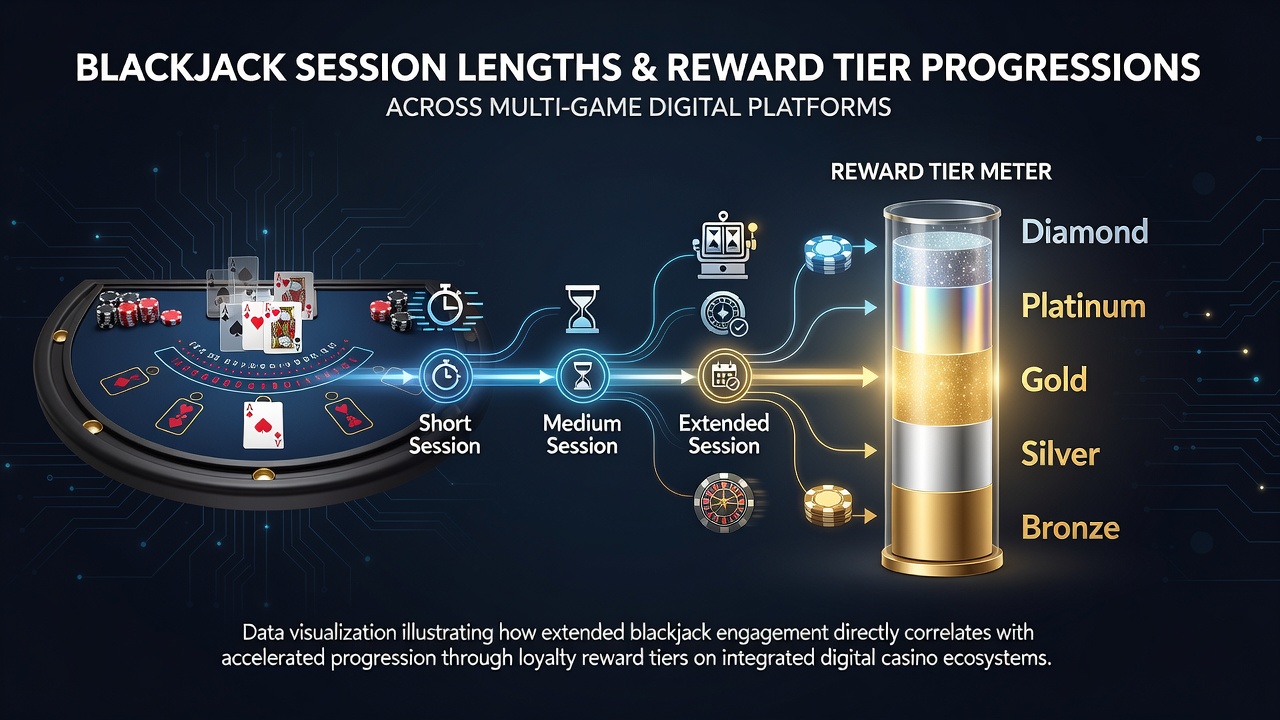
Digital platforms that combine blackjack with slots and table games track player activity through detailed metrics that link session length directly to tier advancement, and operators record these patterns in real time across multiple game categories. Session durations typically range from 30 minutes to several hours, with data showing that extended play correlates to faster accumulation of loyalty points that unlock higher reward levels. Platforms integrate these systems so that time spent at blackjack tables contributes to overall player profiles that determine access to bonuses, cashback rates, and exclusive promotions available across the entire network.
Session Length Patterns in Digital Blackjack Environments
Players on multi-game sites engage in blackjack sessions that average between 45 and 90 minutes according to aggregated platform reports, and these intervals allow for consistent wagering that feeds into tier calculation algorithms. Shorter bursts under 30 minutes often register lower point totals while longer stretches generate compounded rewards because many systems apply multipliers after the first hour of continuous activity. Operators design these mechanics to encourage sustained engagement without requiring players to switch between entirely separate applications.
Research from the University of Nevada Reno's gaming studies department indicates that session length influences reward velocity more than isolated bet sizes in certain digital setups, and analysts track how these durations translate into measurable tier climbs. Platforms record every hand dealt and minute logged, then convert that activity into points that move users through bronze, silver, gold, and platinum categories at predictable rates.
Connections Between Playtime and Tier Progression Mechanisms
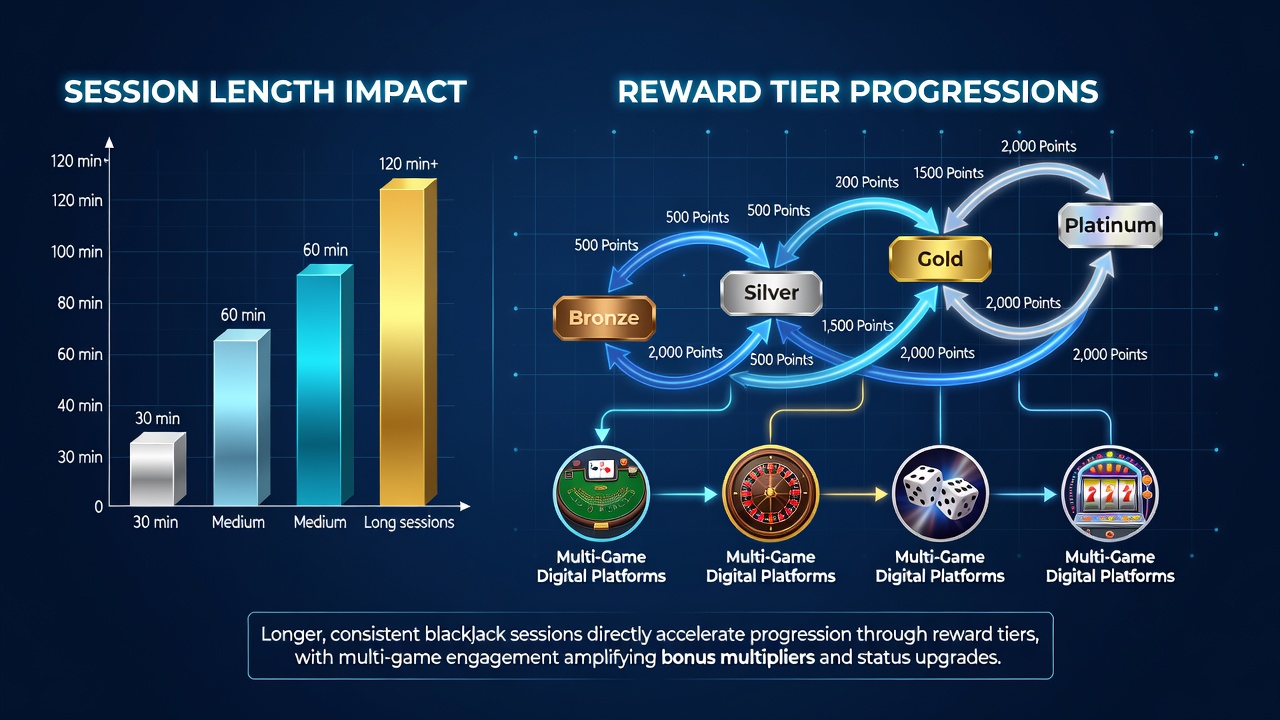
Tier systems on these platforms calculate advancement using a combination of total wagered amount, session frequency, and cumulative duration, so a single extended blackjack session can push a player across multiple thresholds in one sitting. Data from North American operators shows that sessions exceeding two hours produce 1.8 times the tier points compared with two separate one-hour sessions, because the algorithms include continuity bonuses that reset after inactivity periods longer than 15 minutes. This structure rewards players who maintain momentum across blackjack and adjacent game types like video poker or roulette within the same login window.
Multi-game ecosystems apply unified loyalty ledgers so that blackjack-derived points automatically count toward slot tournament eligibility and live dealer table access, and this cross-pollination means longer blackjack sessions accelerate progress in areas that initially appear unrelated. July 2026 platform updates introduced refined tracking that logs micro-sessions more precisely, allowing even brief returns to contribute fractional points that accumulate toward the next reward bracket.
Cross-Platform Reward Integration and Session Data
Integrated networks pull session data from blackjack into a central profile that also monitors slot spins and sports betting activity, creating a single progression path rather than isolated game-specific ladders. Observers at the American Gaming Association note that this unified approach lets operators adjust tier thresholds dynamically based on aggregate player behavior across all titles. A player who logs three hours of blackjack in one week may reach silver tier faster than someone who spreads equivalent wagering across shorter fragmented sessions on different days.
Regulatory frameworks in jurisdictions such as Nevada require transparent reporting of how play metrics convert into rewards, and similar standards appear in Canadian provincial oversight documents that examine digital platform algorithms. These rules ensure that session length disclosures remain consistent so players understand exactly which durations trigger specific tier benefits. Platforms respond by publishing simplified guides that map 60-minute increments to point ranges and subsequent reward unlocks.
Practical Examples of Duration-Based Advancement
One documented case involved a player completing a 150-minute blackjack session that included strategic doubling and splitting decisions, resulting in enough points to advance from gold to platinum status and unlock a 15 percent cashback rate applicable to subsequent slot play. Another profile showed repeated 25-minute sessions over 10 days producing slower tier movement despite comparable total wagers, because the system applied lower multipliers to interrupted activity. These patterns repeat across networks where blackjack serves as the anchor game that feeds data into broader reward ecosystems.
Industry reports compiled by the European Gaming and Betting Association highlight how session analytics help platforms predict when users approach tier thresholds, prompting targeted offers that encourage completion of the next milestone. July 2026 updates across several major operators refined these predictive tools to factor in time-of-day preferences and game-type transitions within single sessions.
Conclusion
Blackjack session lengths function as measurable inputs that directly shape reward tier trajectories on platforms offering multiple game categories, and the data infrastructure supporting these systems continues to evolve with regulatory and technological shifts. Players who understand how duration, continuity, and cross-game point sharing interact can align their activity patterns with the mechanics that govern advancement. Continued monitoring of platform updates through 2026 and beyond will reveal further refinements in how session metrics translate into tangible tier benefits across digital gaming environments.